Humans need food – it’s an unavoidable fact of life that has existed for hundreds of thousands of years. As such, the world’s population size and demand for food go hand-in-hand: by 2050, global demand for feed, food and fibre is predicted to rise by 70% alongside a projected population size of 9.8 billion. Over the years, there has been a transformation of consumer dietary habits, with developing countries experiencing around a 300% increase in meat consumption. This can be put down to growing wealth of individuals in such nations, as this figure follows the global trend of a 62% rise in consumption of meat. Although more people are arguably living a life more sought after, the foregoing increase in meat consumption carries with it the ambiguity of the extent of environmental damage.
If the UK experienced a nationwide citizen switch to veganism, we would observe at least a 26% decrease in greenhouse gas emissions. Less cropland would be necessary to feed the livestock, who would have caused land degradation though soil compaction, land clearing and risks of overgrazing. Thus, plant-based diets are intrinsically less susceptible to loss of arable land, reduction of biodiversity, and contribute less to global climate change.
The land used for animals feed crops could be put to better use; instinctively, we could consider using this land for crops harvested for human consumption, however this land would allow the exploration of using biofuels on a greater scale. This would permit a decrease in fossil fuel combustion and subsequently a reduction in greenhouse gas emissions. In this sense, animal-based diets are limiting human distancing from anthropogenic climate change by dominating productive land which offer a multitude of potential solutions.
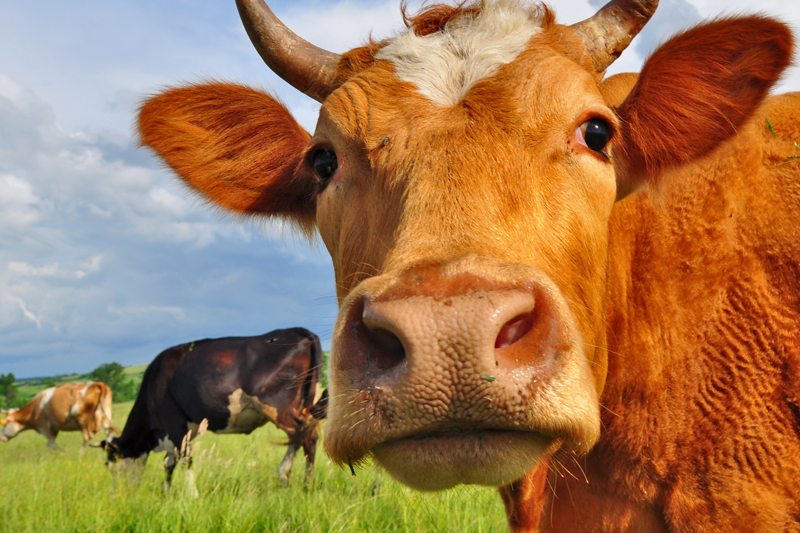
Source: https://www.countryfinancial.com/en/insurance/farm-ranch/livestock.html
On the other hand, more crops don’t necessarily mean the eradication world hunger. Farming methods must change; intensive farming is increasing in popularity across the globe, including but not limited to genetic modification and chemical biological control such as fertilisers, which are directly correlation to processes of eutrophication and algal blooms which wreak havoc in ecosystems. The idea of intensive farming is to produce the highest yield possible, however the rate of growth of major cereal crops plummeted from 3.2% to 1.5% over 60 years. Furthermore, GM crops run the risk of becoming resistant and invading native flora, proving a detriment to biodiversity and natural ecosystems.
Meat eaters are able to continue a more familiar diet whilst reducing their carbon footprint thanks to plant-based meat alternatives, such as soya products or Quorn – a popular meat alternative brand – which contains mycoprotein. Quorn is highly efficient, needing 2kg of wheat per 1kg of Quorn, compared to 12-24 kg of feed needed for 1kg of beef. On the contrary, 53% of genetically modified crops were soy, posing the question of the extent of damage on the environment if demand continued to rise.

Source: http://www.fordcapriforum.com/forum/viewtopic.php?f=10&t=48949
Whilst reducing meat intake offers a solution to global climate change, dietary shifts aren’t certainly viable due to public bias surrounding diet and maintenance of natural environmental quality, stemming from protein production. However, sustaining mixed diets necessitates vast areas of land to meet demand. Nonetheless, whether or not plant-based diets or mixed diets are maintained, land will inevitably degrade to the point of infertility if poor management continues to be practiced. Ultimately, the dynamic nature of consumer attitudes toward eating meat, the continuing prosperity of developing countries, and the increase in food demand corresponding with global population size have each contributed to anthropogenic climate change and the deterioration of global biodiversity. A switch to veganism is one step any individual can make to mitigate the climate crisis, so why not give it a try?
 A Renewable Future